
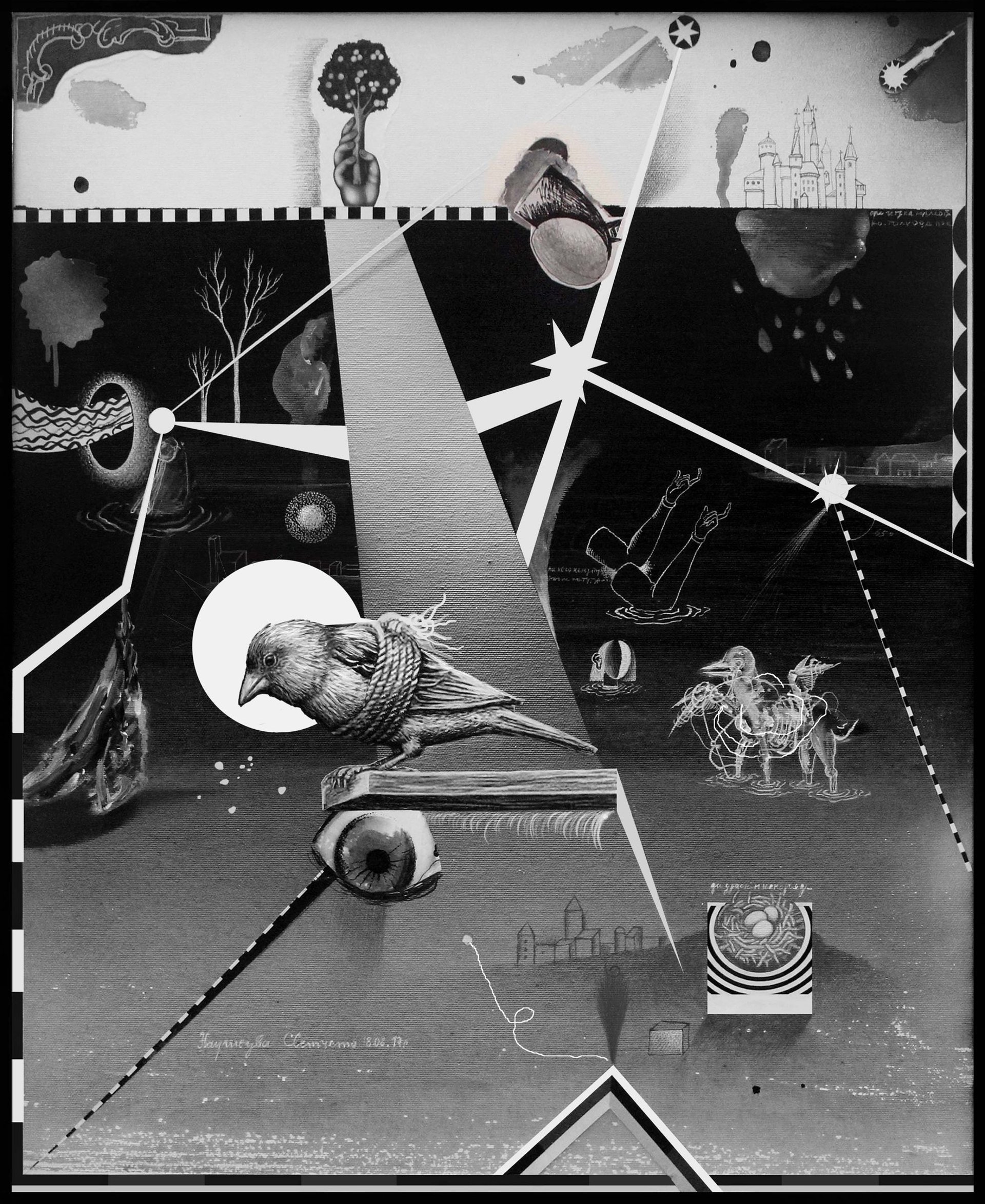
Coming to bed on an empty stomach, I realize I have left my sleep in the eyes of a blind bird. In the land of sage men flow rivers of happiness as red fairies and blue fairies dance around. Some of them bring me milk and honey on separate plates, but I refuse to have them, saying that my stomach suffers from an untreatable illness and I can’t digest milk or honey. But I would be happy if they could bring me some stale rice with onions and sweet green peppers from Dinajpur. I will eat them and then run to the bird’s nest. My neck will try to reach him. Let me sleep under your wings. From tomorrow my son will sleep on the right. Holding each other in an embrace we will say all the things we have not said. If you want, we will let you lie down next to our flower pillow. Midway through our tales of hunger, we shall sweep each other’s tears. You will realize that we, mother and son, love to cry whenever we are together. Our suffering has lived as long as Mother Earth. Sadness is eternal here. Happiness is a myth.
Three Poems
by Umma Habiba
Translated from Bangla by Quamrul Hassan
Eternal Sadness
Cheers
When we say cheers
Different types of wine
Made of aesthetic flowers from hell
Spill over the glasses
Inside my head is the fetus of childish sorrow
Bursting the round bubbles a cobra’s face appears
Inside the joint mouths dance young beautiful actresses
Wearing tongue-splitting ghagras
The dupatta skids off their breasts
Their laughter soon becomes the roar of a lion
Running towards us in an intoxicated pattern
Sadness soon takes shape and wanders away
Possession
And then a highly rated prostitute possessed your bed. Some people were saying that while erecting the grieving statue. The rain that comes down with the cloud that floats in the unknown air, pours down sins. When it’s always about who is right, it’s no longer a love unblemished.
A murder report and the sorrows of a menstruating woman won’t flow in the same way. Every night the language of the body may change. Like the light is born in darkness. The treacherous time has returned home holding your hand. But before that every single dwarf was undefeated. Well now you can admit who possesses the higher soul between you and me.
Artwork by Svetoslav Stefanov
In the last three years, I translated around sixty of Umma Habiba’s poems, but this was my first time translating her prose poetry (two of the three poems published here). It’s mainly because they are not from her debut book Ghashe Ghashe Roktoful (Bloodflowers in the Grass). They are from the bunch she is trying to put together for her second book.
I have been a big fan of her first book, but these prose poems give the readers a different taste. Translating food-related words and phrases in “Eternal Sadness” was quite a challenge, but I assume I have done a decent job.
If we look at “Possession,” we see her play with very pregnant imagery and metaphors (I have chosen to call them “wild metaphors” because of the uniqueness and daringness). It’s also the same in “Cheers,” which is not a prose poem.
I am not going to say much; I leave the rest up to the readers. I started quoting words and then ended up quoting sentences, and then ended up quoting almost the whole poem. Rather, I stop here.
Translator’s Note
Umma Habiba is a poet and theater activist from Dhaka, Bangladesh. Her debut book of poetry Ghashe Ghashe Roktoful (Bloodflowers in the Grass) was published in 2022. Umma is also a development professional, and has worked with Rohingya refugees, children with special needs and the underprivileged indigenous people in the country's hill tracts. Her poems in English translation have been published in different reputed international literary journals, including Agni, Copper Nickel, Hayden's Ferry Review, and Cambridge Review of Books. Besides studying music at the University of Development Alternative (UODA), at present she is also working on her second book of poems and her debut novel.
Quamrul Hassan is an MFA candidate in the University of Arkansas’s Program in Creative Writing and Translation. His poems and translations have been published or are forthcoming in Agni, Copper Nickel, Columbia Journal, Mantis, Hayden’s Ferry Review, Cambridge Review of Books, The Queens Review, The Malahat Review, World Literature Today, The Los Angeles Review, Moon City Review, Tupelo Quarterly, Harf, The Bombay Literary Magazine, Usawa Literary Review, Prachya Review, and Star Literature Review. He is also the author of the haiku collections Spring Moon (2011) and Hyaku Haiku (2016). His haiku and tanka have appeared in Asahi Shimbun, Mainichi, Frogpond, Modern Haiku, The Heron’s Nest, Blithe Spirit, Laurels, Failed Haiku, Ribbons, and Wales Haiku Journal.
Read More by Quamrul Hassan
Fidelity is… Depending on time, place, and person, everything or nothing.
Ninja or superhero? Superhero.
Full-time job or glorified hobby? Glorified hobby.
A translation I fell in love with is… Kaiser Haq’s translation of Shadhinata Tumi (“Freedom, You Are”) by Shamsur Rahman.
My favorite misconception about translation is… Literal translation is the ultimate translation.
My favorite translation grant is… PEN Translates x SALT.
Money is… More important than we admit.
Quamrul’s Translation Slam Book
DROP US A LINE AT
submit@thethirdwheel.org
editors@thethirdwheel.org
© 2025. All rights reserved.
*Your viewing experience may vary depending on your browser or device settings. If you encounter any difficulties, please change your browser or adjust your device settings.