
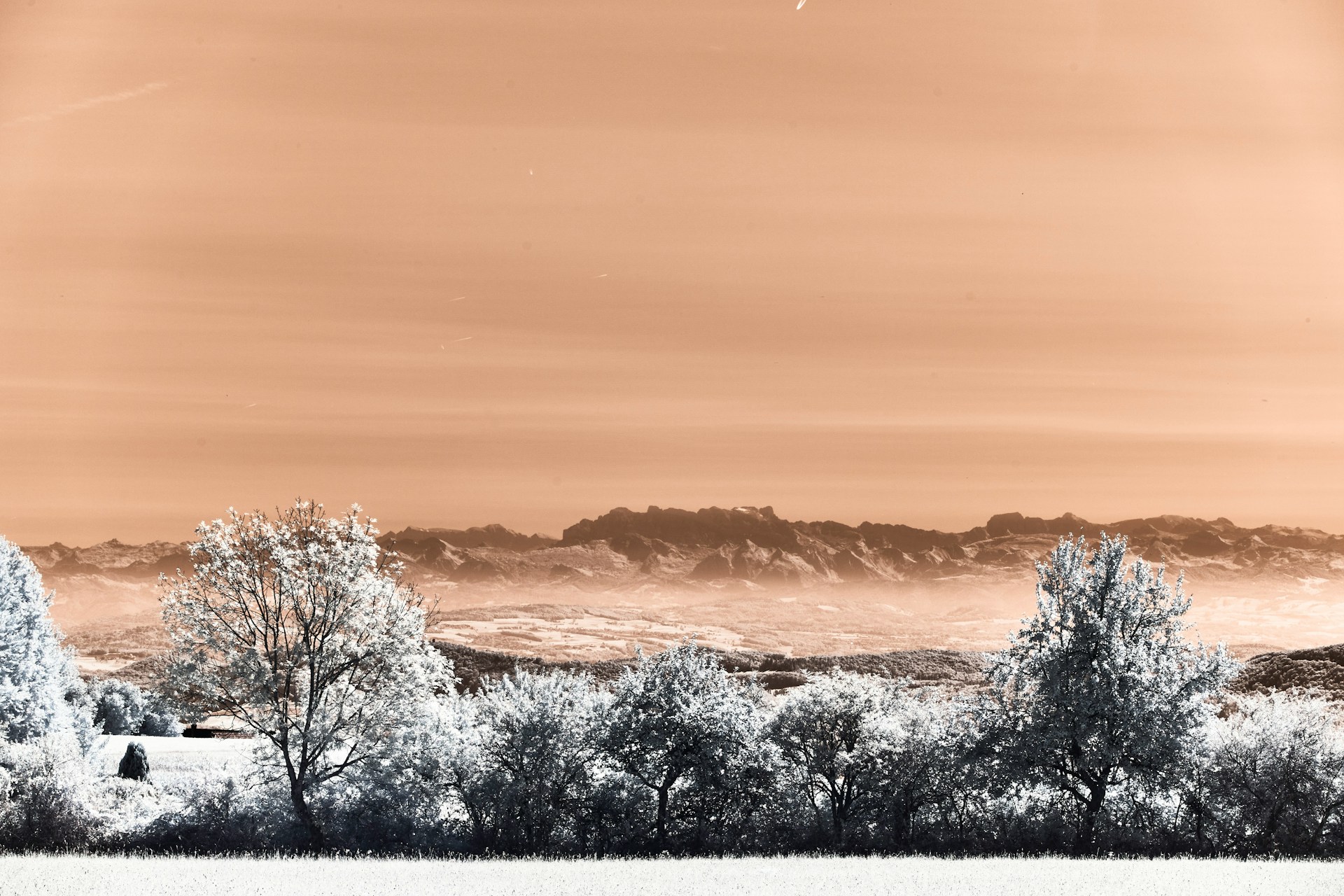
Photo by Wolfgang Hasselmann on Unsplash
An Excerpt from Tales from the Inuit War
by Imre Wirth
Translated from Hungarian by gabor g. gyukics
Chapter 3.
Tlingits and Gold Diggers – Roger Burke – Tuscarora’s Mission – The Diary of Liam Tomlinson – Black Dog’s Funeral on the Ice of the Yukon – Dodge Brothers
Compared to the legendary Klondike, the mines of Mt. Potosi opened late—as late as 1919—after the peace treaty that ended the Inuit war. Learning from the consequences of the Gold Rush, and much to the annoyance of the gold diggers, the mines were immediately placed under state control, and the State Mining Trust effectively enforced its monopoly: mercenaries armed with bloodhounds and rifles strictly controlled the drunken tide of the gold sievers. The site was discovered in the western foothills of the Mackenzie Mountains, northwest of Dawson, at the upper reaches of the Yukon River, but the central section was part of the Tlingit Reservation. Colonel Roger Burke was not at all satisfied and relaxed after the destruction and looting of Ühl, so he hastily responded to the complaint against the expropriation of the Tinglits, assuming the authority of the missing Lieutenant Liam Tomlinson, in flagrant violation of minority and human rights. The constantly shivering soldiers captured Black Dog, the Tlingit chief, and secretly deported him to the southernmost Alexander Island. In the occupied village of Old Rover, they practiced target shooting on the totem poles and tried to discredit their shaman, Hamasoaka, by making him look like a charlatan. Due to the abuse he suffered, one day the shaman disappeared. Roger Burke listened irritably to his trackers’ report—the tracks were lost after a few miles because of the snowfall, but they undoubtedly led to Ühl.
“No sense of success.” He drummed his fingers on the bundle of documents lying on the table. “Failing miserably on all fronts. Uncatchable enemy, melting ice palaces, and I may have sent the ice flags between blocks of ice to Washington in vain, for the zealous guards will be saluting standing in the melting slush, while the President is grinning in embarrassment. That miserable Tomlinson”—he looked at his predecessor’s portrait on the wall—“has left me a big pile of shit.” He imagined Tomlinson in his tight ice suit, and that thought put him in a better mood—one that didn’t falter even when he turned back to the trackers. He glanced at them unhurriedly—they were, in fact, trappers, forever bent towards the ground, watchful for their own traps that made the woods dangerous to walk in. Burke didn’t take notice of certain things they did, and in return, he could always count on them.
“Good,” he mumbled, “leave now. I assume you do know what else is waiting for you?” His gaze followed the stumbling procession of the deathly pale trappers to the exit of the boringly cold governor’s palace. When he was left alone, he leaned against the table and, with full force, drove the pointed end of his compass into the globe of the world, around Ühl’s supposed location.
*
The gold diggers, who had never been on good terms with the Tlingit and who, huddled around the campfire, struggled to make conversation, sometimes even projecting images of skirmishes from their collective dim memories, were now in an absurd situation. Cursing, they spat their saliva, pieces of cork stuck in their teeth years ago but now luckily picked out, rotting cartilage of meat eaten raw, and filler words belched out unrecognizably into the fire. With their tangled beards, they gave the impression of dirty rags tossed together. Most of them were in their forties, so they had to deal rather gingerly with their memories. On a rare occasion, someone would squeeze one out, but it would soon be absorbed by the thirsty sponge of the common chatter and the characteristic guardian of campfires, the ragged laughter surrounding farting, and so by the time the lukewarm air, stirring sadly, could bid farewell to its truest owner, the man had forgotten all about it.
They were all called Old Big—the first one borrowed his name from the first digger in Klondike to strike it rich. This notoriously eccentric caste was known to all in the world of gold diggers who traded sieves, shovels, lives, and tooth fillings without heartache, and for two decades the group had been held together by an ugly hatred stemming from Burke’s insult.
The reason they were in this awkward position, as Old Big so grandiloquently put it, was that they were in the same league as the no-man Tlingit. Picking a fringed piece of string from his yellowish teeth and throwing it into the fire, where it got ablaze and sparkled like crazy, he told the story: “So it happened, that with Old Big right there,”— he pointed to a digger with a gaping mouth—“we went to Odrovij to get some nosh. The Tlingit were scared ’cause they had a big day. They were waiting for Black Dog to come back, you know, the one who was taken away when we were kicked out. My Old Big brothers,”—he raised his voice—“the days of Rotten Burke are numbered. This Old Big here, this one, told the Tlingit that their freedom was stolen from them by Burke. For twenty years we’ve been mortified ourselves in the land of gold, for twenty years we’ve been starving, for twenty years we’ve been stealing the Tlingit chow. But now Black Dog is coming. My Old Big brothers, the road to gold is through the Tlingit!”
Wiping their bleary eyes, the Old Bigs squinted into the flames and imagined themselves in brimmed hats, elbow-length shirts, and knee-high boots, dipping their huge sieves into the water murky with gold and howling high praise of the death-stricken Tlingit chief, who, surrounded by his helpless escorts, was lying in his stretcher, covered with a blanket, writhing, thin as a bone, ten miles away from Old Rover Village.
*
Moss grew on my face. North, always just north, that’s what I breathe onto the paper. I made a funny little map, then rolled it into a ball and threw it away: two black birds squabbled over it. There is no charm, no tenderness over here—thorny pine trees pierce the air, which sticks to the face like huge balloons after bursting out. It’s choking me—under a bush, my backpack is hoping to meet the person I once was. I scrape the thick plaque of serenity from my teeth, roll my eyes when they approach, and write constantly with invisible letters on the growing pages. Black Dog is carried up front, they weep for him as if he had been lost. They leave me alone: two sick people would be too many; it’s enough for them to ask directions by pointing. North, always just north. Two of us perch on the scruffy little tree of my consciousness, a hunter in a brimless fur hat reads our movements. A wide beaten path, an unmistakable road. The saliva of calm freezes on the cheeks, my foamy mouth gurgles a streak of blood on the ground. My invisible ink spills over the horse’s mane, I rap the rhythm on it, I look for the letter “a” on its heart valve. Tlingit come running with faces clotted with pain—the last great chief, Black Dog, is dead. North, always north! I show them the way with eyes goggled, and a huge unshakable palm covers it all.
*
The next day, early morning, the trappers reported to the barracks, where they were given rested horses, ammunition, and food, and where Captain Kirstensen listed at length who, when, where, how, and in what agony had died as a result of their traps. After they had gone through the usual ceremony and were strolling out with their horses, Kirstensen gave them a pack of tobacco and patted them on the back. He hated all but one of them, but he bowed his head before death.
After they left Anchorage, their guide, a half-Indian named Tuscarora, asked them flatly if there was anyone besides him who wanted to carry out the order. In the sudden silence one could hear the roar of the glaciers of Greenland.
“My advice to you is to disappear in Canada as fast as you can,” he said in a little while, turned his horse toward the north and set off. He didn’t despise them for being cowards, for he hadn’t undertaken this journey out of loyalty either. He had no intention of going to Ühl; he wanted to find the hidden treasure of the Inuit in the dead pine groves of Mountain Brooks.
Legend has it that the abandoned goldfields of the Inuit Kingdom lie beyond the Arctic Circle, and the extracted precious metal lies beneath an unbreakable ice vault beyond anyone’s reach. Due to the war, most of the gold had to be spent on weapons, renting transportation, and on inventions—that’s how the auxiliary troops from Greenland or Siberia were able to arrive in time for the siege of Fort Dawn despite the great distances. Around the end of the war, when the fall of Ühl seemed inevitable, its wealthy banks, which still held the central gold blocks that hadn’t been turned to money, panicked to save their assets. But because of the track-melting operations, the only ice rail link available was to the Brooks Mountains, so this area remains the only hiding place even to this day.
Tuscarora cleverly questioned some veterans who had been ordered to Anchorage. What he learned was that Burke and his troops had retreated in fear, so he didn’t bother to search the Brooks Mountains. Tuscarora did not shy away from the fevered imaginations of the veterans, who painted the icy landscape as hell, as the devil of secrecy was leaving their rum-guzzling mouths with muffled burps. Before them Tuscarora placed devilish maps, his hand quickly followed the spider’s web-like appearance of the struggle between imagination and memory, in the midst of which Ühl sprawled out plump and hostile, testing the soldiers with a barely perceptible line: would they recognize the narrow-gauge ice railroad, the firing positions of the cannons in the Brooks Mountains, the trampled rectangle of Burke’s tent, the buried snow engine? So, that’s how he refined the map, weaving the gold-sprinkling web from night to night.
He didn’t mention his plan to anyone, waiting for the same chance that had once given him life. Walking in snow-drowned forests, he soon grew weary of all the traps—like many others, he did not enjoy the sight of a bobcat with its head blown off or a pine marten with a self-releasing arrow in its heart, but instead, for practice, he spent nights freezing his skin blue in an empty bears’ den or getting stabbed by the branches of a redwood tree while fleeing from an angry cougar. Not wanting to get rich selling pelts, he had never charged outrageously high prices, and his traps and snares were imaginative but not sadistic, unlike others, and did not cause much damage. Captain Kirstensen, who was visiting the pub with some serious intentions, soon noticed the humble trapper, who was a moderate drinker and thus always available; and so Burke put him in charge of this particularly unreliable group.
Tuscarora had completed successfully some very difficult tasks and was now riding alone, carrying official papers towards the unlockable safe of an imaginary city, with a complicated map folded up in his pocket. Only the exact coordinates were missing, and it was up to reality to supply them.
*
That bundle of papers, which he had spread out before himself the previous day after breaking the seal at last and forcing himself to read, had sat stout, bound, and sealed in Burke’s desk drawer for years.
It was Johann Schmeichel, Tuscarora’s predecessor, who found them somewhere in an ice cave, in an iron cassette, made impenetrable by the freezing cold. Schmeichel, who still spoke English with a Bavarian accent, thought that luck was smiling at him, while his breath melted the frost from his blondish moustache. He carried his heavy burden home in great agony, in a fevered frenzy lit the fire in the stove, stripped himself naked, and sweated, waiting for the ice to melt, and for the treasure to open. With a stomach that burned with nausea—he had vomited and tried to clean up a bit—he handed Burke the papers, but the reward of at least one nightcap wasn’t coming. Burke took the bundle without thanking him and shoved it into the bottom drawer with disgust. Schmeichel left downheartedly.
Burke recognized the seal at once: Tomlinson had it made for the tenth anniversary of the construction of Fort Dawn, a watchtower on the back of a seal—a figment of the lieutenant’s sick imagination.
After so many years, perhaps because of the resurrection of the ghost of Ühl with the escape of the Hamasoaka, he forked out the bundle. He looked at the dirty dust wrapper and flipped open the lid of his pocket watch; it was 2:55 p.m. Tuscarora and his band could be right at Mount McKinley. He grabbed the paper cutter and broke the seal.
“Now, let’s see,” he moaned, “what that wretched fellow had found.” He thought about that for a moment—the eagerness of Schmeichel’s obsessive, suggestive gaze scorched his face, his stone-cold corpse was dragged into the fort’s courtyard by Indians. His suicide note had long been discredited. “Voluntary death by freezing.” The army doctor shook his head. “Out of the question. The instinct to live can’t be so radically overcome by the desire to die. The rope and the gun are different. But freezing to death…”
Imre Wirth was born on July 9, 1964, in Budapest, and currently lives in Pomáz. He has four children. He graduated from the Department of Hungarian History and Aesthetics at ELTE BTK in 1991. Beginning in 1995, he first taught in the Department of Aesthetics at Pázmány Péter Catholic University, and later in the Department of Modern Hungarian Literary History at ELTE BTK. Since 2002, he has worked as a freelance writer. Between 2011 and 2016, he was a copy editor at the Kunsthalle in Budapest, and in 2016, he became a museologist at the Petőfi Literary Museum, where he continues to work.
His publications include the novel Történetek az Eszkimóháborúból (JAK–Pesti Szalon, 1994), which also appeared in German as Geschichten aus dem Eskimokrieg in translations published by Volk & Welt (1996) and Bertelsmann (1998). He is the author of several poetry collections, among them Ő volt a rejtélyes állat (Scolar, 2018), Lementem egy üveg borért Hajnóczynak (Scolar, 2020), and Úgy járkálsz, mintha lenne otthon (Scolar, 2022). In 2024, Magvető published Átkelés a Szuezi-csatornán, a volume of conversations between Zsuzsa Takács and Imre Wirth. The same year, his novel Karolina kertje. A név kátyú, vaddisznódagonya, omladék, szerelem was published by Bookart.
His work has been recognized with several awards, including the 2021 Artisjus Literary Prize in the Poetry category and the 2023 Kemény Zsigmond Prize of Kolozsvári Helikon.
gabor g gyukics is a poet and translator. He is the author of thirteen books of poetry in six languages and just published his second book of original prose. He has also translated nineteen books, including A Transparent Lion, a selection of poetry by Attila József in English (Green Integer, 2006); Medvefelhő a város felett, an anthology of North American Indigenous poets in Hungarian (2015); and Swimming in the Ground, a contemporary Hungarian poetry anthology in English (Neshui Press, 2001).
His most recent translations include two contemporary Hungarian poetry anthologies in English: They’ll be Good for Seed (White Pine Press, 2021) and Shelter Under the Sun: Poetry of Three Hungarian Women (Singing Bone Press, 2021). He also translated an anthology of American poetry and prose into Hungarian—Viselnéd a szemem (L’Harmattan and Károli Publishing Groups, 2021).
His most recent poetry collections, both published in 2025, include Detoxification of the Body, published by El Martillo Press in Los Angeles, and L’evoluzione degli armadilli / The Evolution of Armadillos, published by Persephone Edizioni in Italy.
He was co-translator and chief editor of the Hungarian-language edition of Essential Allen Ginsberg, titled Nélkülözhetetlen Allen Ginsberg (Európa Publishing, 2022).
He received the Hungarian Beat Poet Laureate Lifetime Award in 2020.
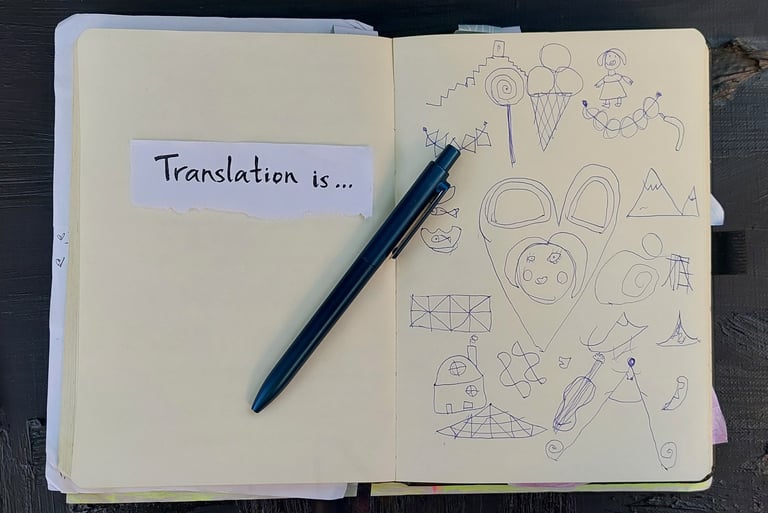
gabor’s Translation Slam Book
Fidelity is… important when it comes to translation.
Ninja or superhero? Neither.
Full-time job or glorified hobby? Full-time job.
A translation I fell in love with is… The Master and Margarita, the first English and Hungarian versions.
My favorite misconception about translation is… rewriting the poem to please the reader.
My favorite translation grant is… is there any I should know about?
Money… becomes significant when you have a family and kids.
DROP US A LINE AT
submit@thethirdwheel.org
editors@thethirdwheel.org
© 2025. All rights reserved.
*Your viewing experience may vary depending on your browser or device settings. If you encounter any difficulties, please change your browser or adjust your device settings.