Drugs Are an Unopened Comic Book For a Drug Offender at Chiayi Lucao Prison
by Pek-êng Koa
Translated from Taiwanese by C. J. Anderson-Wu
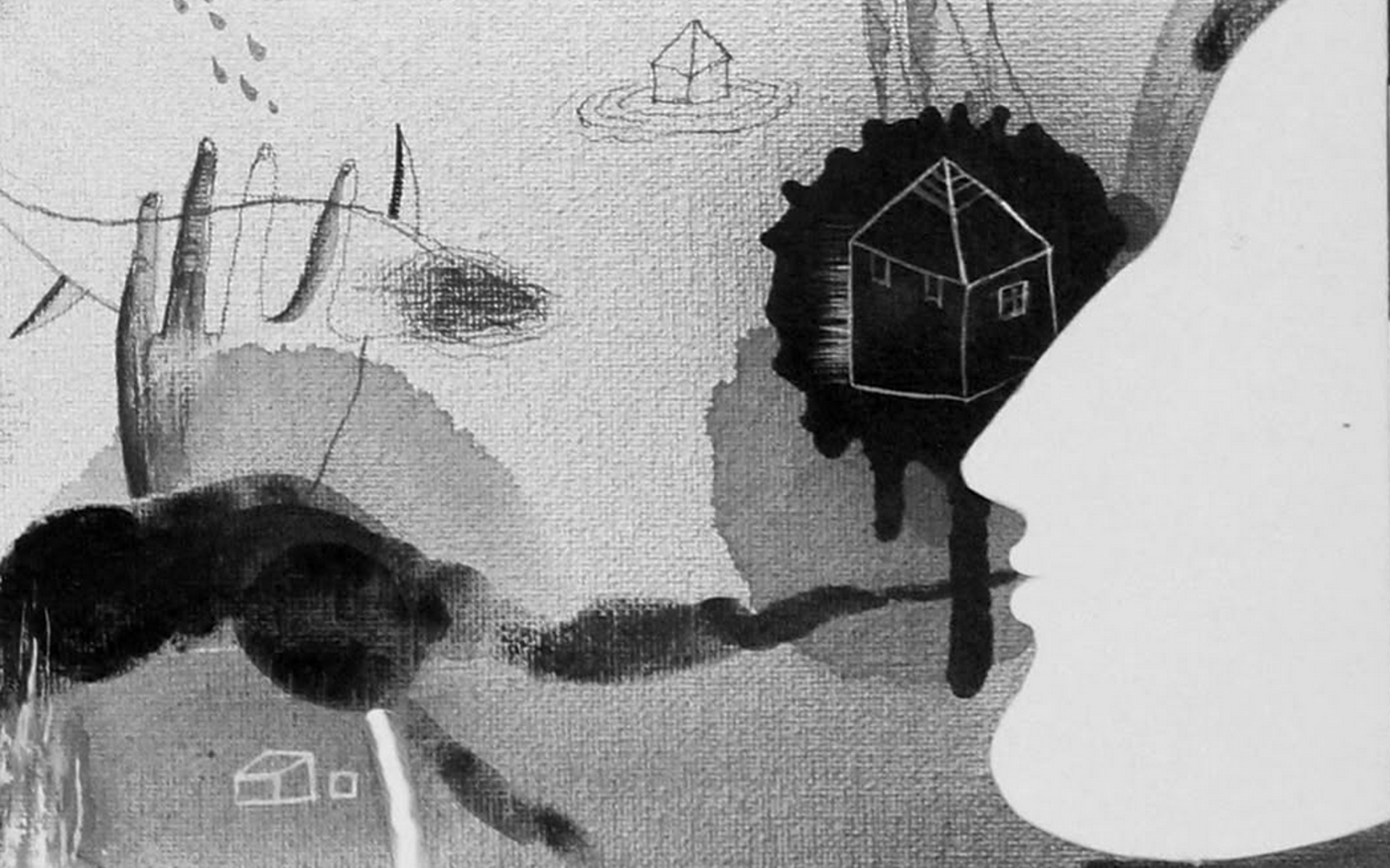
Artwork by Svetoslav Stefanov
Drugs are an unopened comic book
designed to lure curious youth
devouring the freshest souls. Once you open
its tempting first page, you are destined
to be a death-row prisoner without a sentence
Young blood of innocence, mingled
with toxicity and decay. A dislocated life
wanders in a tilted heaven
drifts around a dazzling rainbow
Sound of demons sucking bones is heard in the gloomy cell
You have to secretly hide your longing in an inner pocket
lying between the dream of twenty and the reality of thirty
Leaping through iron windows, cutting wire mesh, climbing iron walls
flying along the old Highway 82, toward the lost past
Clinging tightly to wings, memory spreads like the roundabout fountain
Stench of the ditch paves a layer over the road flanked by weeping willows
Bricks of demolished military villages by the lake still scatter everywhere
despite the fragrance of flowers on the trail, smell of barbecue in the park
Weeds from the graves slowly creep closer
waving to you by the bridge called Eternal
Your first love and youth are buried here
Heavy karma hammers you down
into the narrow cell, where dream and reality
struggle in a tug-of-war.
Your regret feels like conscience gnawned by sharp teeth
yet you realize that turning over a new leaf is a soap opera of make-believe
Only then do you know a future is the prisoner’s luxury
In heaven, two stars hang from your mother’s eyes
watching you light a flame, trembling,
reach toward the edge of the comic book
Translator’s Note
The Taiwanese original of Drugs Are an Unopened Comic Book carries a raw, colloquial energy that is deeply rooted in local dialect and oral rhythm, while the English translation smooths those textures into a more universal, literary tone. In Taiwanese, the use of reduplication—phrases like “坱蓬蓬,” “趨趨,” “賴賴趖,” “輾輾遨,” “沓沓仔,” and “爍爍顫”—creates a musical cadence that feels spoken, almost chanted, but this rhythm is difficult to replicate in English. The translation instead leans on imagery and solemn phrasing, which makes it accessible to global readers, but inevitably loses some of the playful sound and folk texture of the original.
The original poem is also saturated with cultural anchors: a road flanked by weeping willows, a demolished military village by the lake, and a bridge called Eterna situate the text firmly in the geography where the prison is, evoking memory and community. In English, these places may not resonate with a non-Taiwanese audience. Similarly, figures like “魔神仔” carry folkloric weight in Taiwanese, conjuring demons from local belief, while the translation renders them simply as “demons gnawing bones,” a phrase that conveys menace but not the cultural specificity.
Philosophically, the Taiwanese version is biting and ironic, criticizing the correctional institute as a vulgar office play and dreams as a kind of debt item—the prisoner’s only possession. The English translation reframes these ideas more gently, calling a new start a soap opera and dreams a luxury, which captures the sentiment but softens the edge.
Overall, the Taiwanese original feels earthy, oral, and culturally grounded, while the English translation is solemn, lyrical, and designed for universality. The former speaks in the rhythms of lived experience and local speech; the latter reshapes those rhythms into a form that resonates with readers unfamiliar with Taiwanese dialect, but at the cost of losing some of its local flavor and immediacy.
C. J. Anderson-Wu is a Taiwanese writer and literary activist whose work explores themes of historical trauma, transitional justice, and human rights. Her writing focuses on Taiwan’s authoritarian past, particularly the White Terror period (1949–1987), during which tens of thousands of people were persecuted under martial law.
Anderson-Wu’s acclaimed short story collections Impossible to Swallow (2017) and The Surveillance (2021) delve into the psychological and societal scars left by this era. Her third book, Endangered Youth—Taiwan, Hong Kong, Ukraine (2025), expands her scope to examine the shared struggles for freedom and identity in these three regions. Her poetry collection Clear My Name—Taiwan, Hong Kong, Ukraine (2025) was shortlisted for the Flying Island Poetry Manuscript Contest.
Anderson-Wu’s stories and poems have received recognition from numerous international literary platforms, including the Strands Lit International Flash Fiction Competition (2019), the Art of Unity Creative Award by the International Human Rights Art Festival (2022), the Writers’ Mastermind Contest (2022), the Invisible City Blurred Genre Literature Competition (2023), the Wordweavers Literature Contest (2023, 2025), the Flying Island Poetry Manuscript Contest (2024), and the Premio Letterario Internazionale Città di Arona (2025).
Pek-êng Koa is a transformative figure in contemporary Taiwanese literature whose work represents a powerful bridge between the lived experience of the carceral system and the revival of the Taiwanese language. His identity as a poet was forged through seventeen years of imprisonment following two charges of robbery. While behind bars, he used a dictionary to reclaim his mother tongue, a language that had been suppressed for decades under the rule of the Republic of China, which retreated to Taiwan. This act of linguistic recovery became his primary tool for survival and artistic expression, allowing him to document the dehumanizing reality of prison life while reclaiming a sense of cultural belonging.
His literary style is defined by a haunting social realism that finds profound meaning in the smallest, most neglected details of the margins. In his celebrated collection Fireflies Within the Walls, he uses the image of a flickering light to symbolize the fragile hope of the incarcerated. His verses often weave together local geography with philosophical reflections.
Koa is recognized as a vital advocate for the Taigi/Taiwanese language, ensuring that the unique rhythm and “breath” of the Taiwanese vernacular are preserved in high literature. Throughout his writing career, Pek-êng Koa has received thirty-seven literature awards.
Read More by C. J. Anderson-Wu
“In the Patakan of a Mountain Porter” (a poem by Salizan Takisvilainan, published in Eratio)
“Ten Notes on Rhetoric via the History of Sea Salt Harvesting” (a poem by Pek-êng Koa, published in Poetry Potion)
“Pure White Shirts” (a poem by Pek-êng Koa, published in Kalliopex)
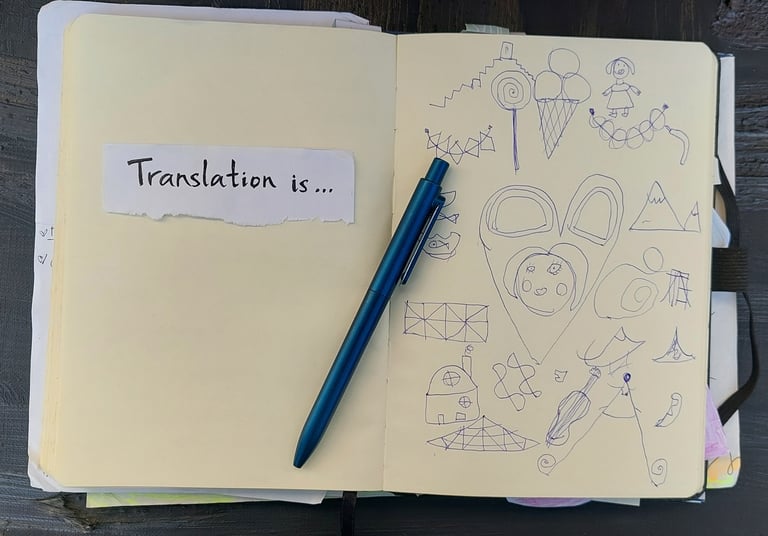
C.J.’s Translation Slam Book
Fidelity is… a fast-moving train.
Ninja or superhero? The former sounds better.
Full-time job or glorified hobby? Glorified job and full-time hobby.
A translation I fell in love with is… lost.
My favourite misconception about translation is… a new creation.
My favourite translation grant is… a fight ticket.
Money is… a translatable language.
DROP US A LINE AT
submit@thethirdwheel.org
editors@thethirdwheel.org
© 2025. All rights reserved.
*Your viewing experience may vary depending on your browser or device settings. If you encounter any difficulties, please change your browser or adjust your device settings.